

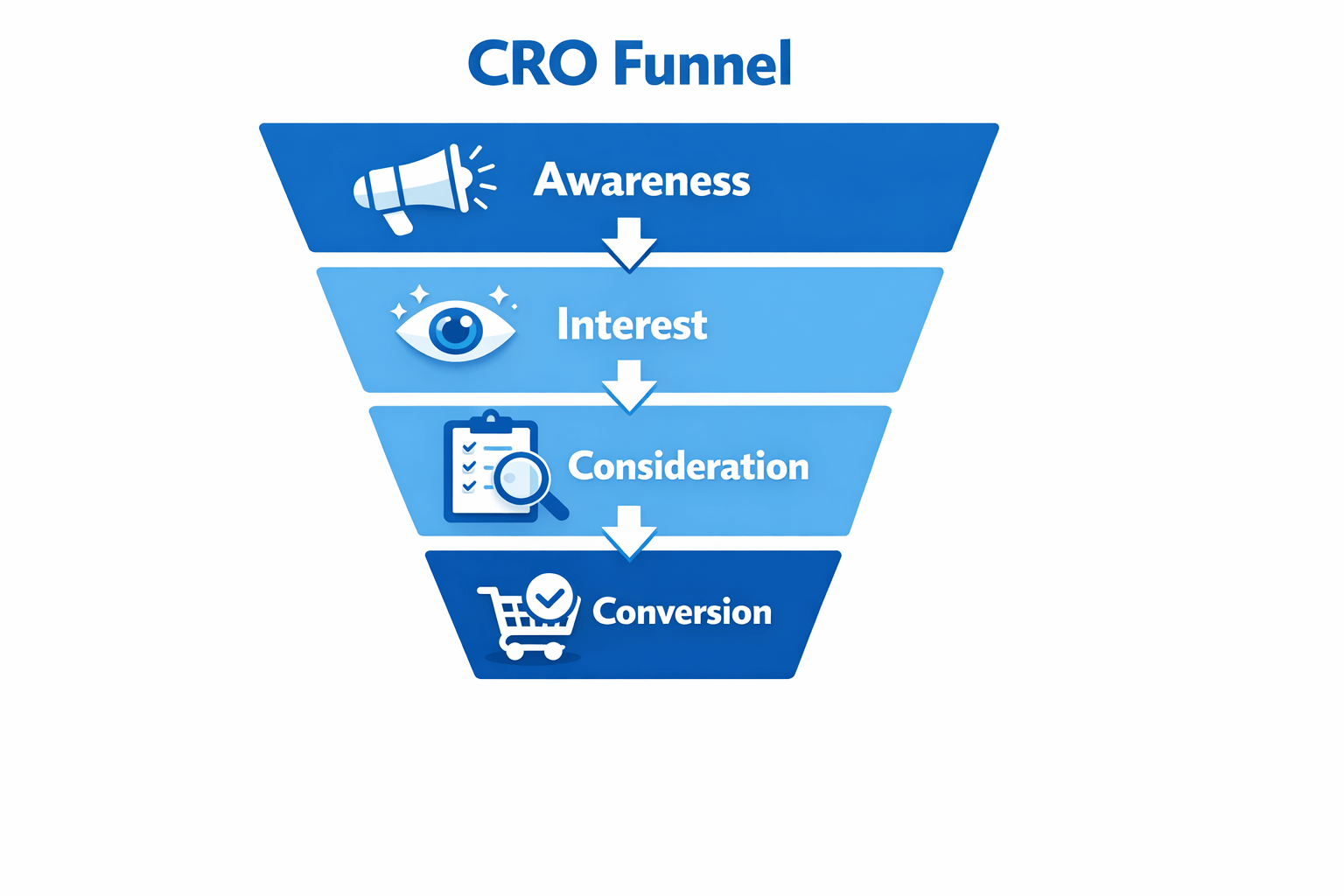
Getting traffic to your website is only half the battle. The real win? Converting those visitors into leads, customers, and loyal brand advocates. That’s exactly what Conversion Rate Optimization (CRO) is designed to do — and in this guide, we’ll walk you through everything you need to know to get started.

What Is Conversion Rate Optimization (CRO)?
Conversion Rate Optimization (CRO) is a data-driven marketing approach that focuses on increasing the percentage of website visitors who take a desired action — also called a conversion.
A conversion can take many forms, such as:
- Making a purchase
- Signing up for a newsletter
- Clicking a specific link or button
- Downloading a resource
- Requesting a quote or demo
Within a single website or campaign, you may track multiple conversion types. For instance, a social media ad might measure click-throughs to your site, while a product page might track “Add to Cart” actions. The key is defining what success looks like for each touchpoint.
How to Calculate Your Conversion Rate
Before you can optimize, you need a baseline. Here’s the simple formula to calculate your conversion rate:
					Conversion Rate = (Total Conversions ÷ Total Visitors) × 100

Example: If your online store received 50 sales from 1,000 visitors last month,
your conversion rate is:
(50 ÷ 1,000) × 100 = 5% conversion rate
A few things to keep in mind when calculating your ecommerce conversion rate:
- Decide whether a conversion is counted at order placement or after fulfillment.
- Determine if you’re tracking unique visitors or total sessions.
- Be consistent in your data collection to ensure reliable comparisons over time.
What Is a Good Conversion Rate?
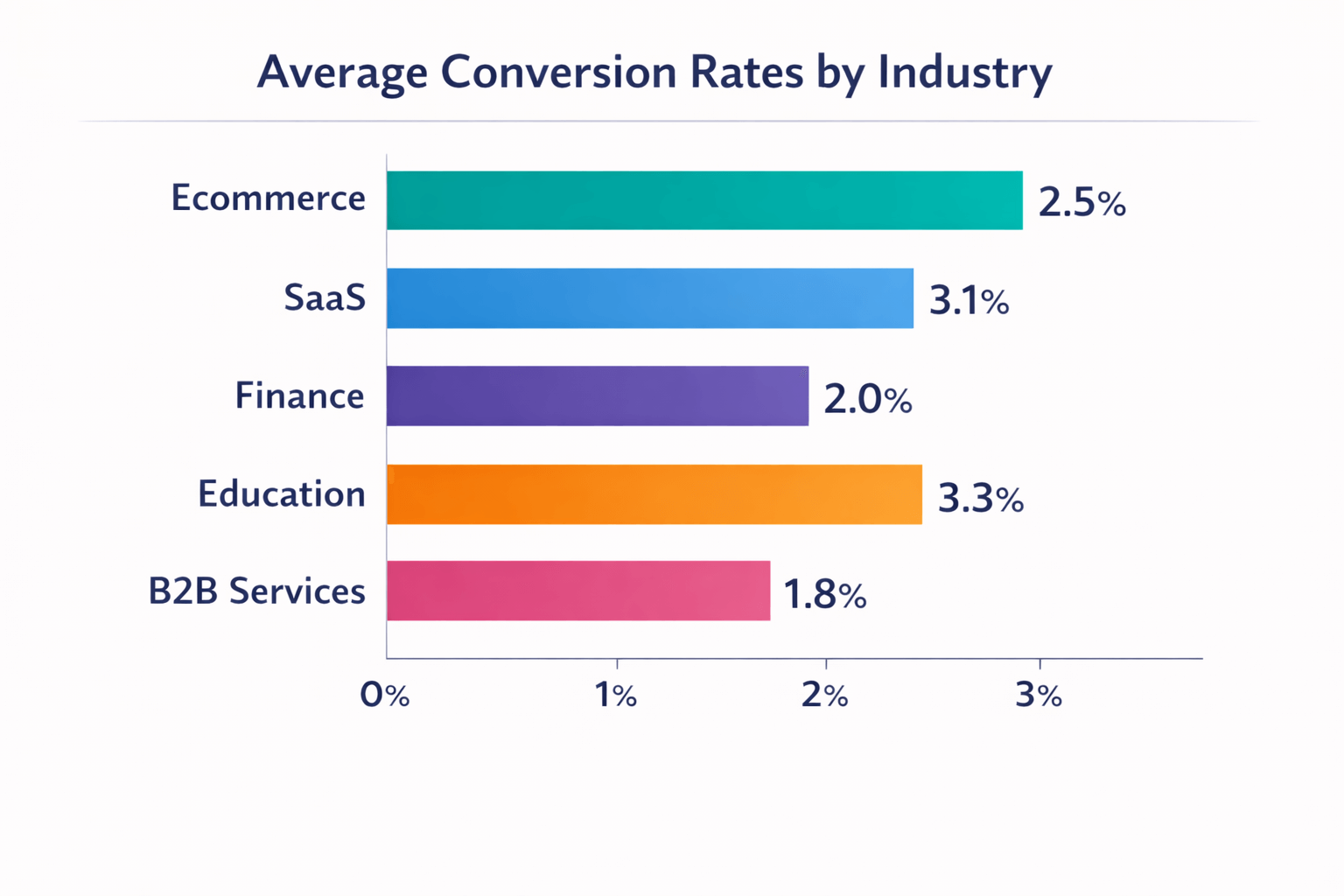
For ecommerce websites, the widely cited industry benchmark for conversion rate sits between 2.5% and 3%. If your rate exceeds 3%, you’re performing among the top-tier online stores.
That said, your benchmark should ultimately reflect your own industry, audience, and business goals. As you build more CRO data, set custom targets based on your historical performance.
Where to Start with CRO: 3 Core Areas
1. Product Pages
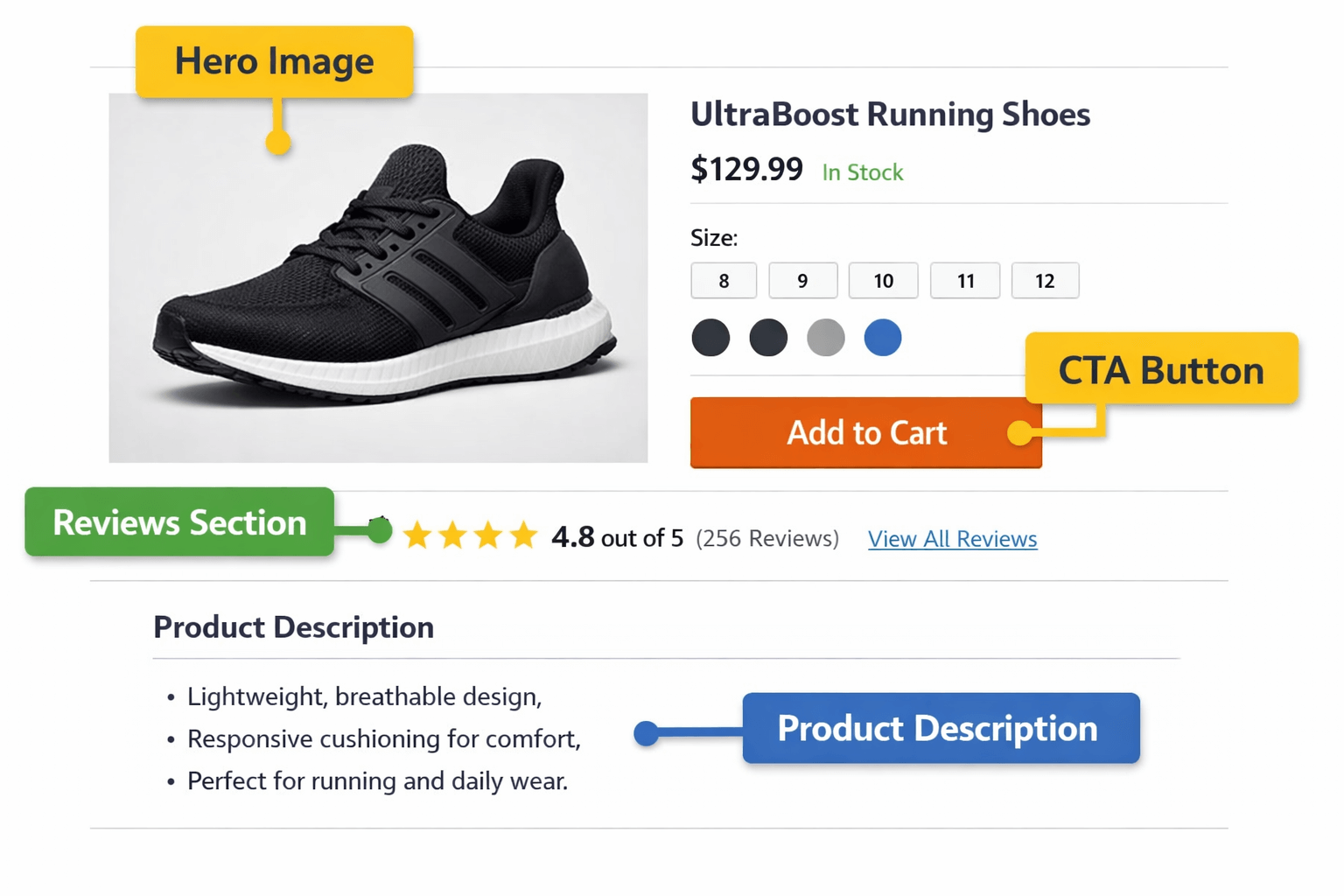
Your product pages are the engine of any ecommerce business. Optimizing them can directly impact purchase decisions. Focus on:
Product Photography
High-quality visuals are critical when customers can’t physically interact with your products. Use high-resolution images, show multiple angles, and consider adding 360-degree views, demonstration videos, or 3D models to boost confidence.
Product Descriptions
Strike the right balance between detail and brevity. Your descriptions should clearly communicate construction, fit, and unique selling points — without overwhelming shoppers. Use bullet points and concise language to improve scannability.
Brand Voice
The tone of your content influences trust. A consistent, relatable brand voice builds connection with your audience. You can reinforce credibility through:
- Customer testimonials and verified product reviews
- Trust badges and partner endorsements
- A flexible, easy-to-understand return policy
- Authentic product videos featuring real use cases
2. Blog Posts
If your blog attracts organic traffic, it’s an untapped conversion goldmine. Focus on two elements:
Calls to Action (CTAs)
Every blog post should guide readers toward a next step — whether that’s exploring a related product, signing up for a newsletter, or booking a consultation. Use A/B testing to find the most effective CTA placement and messaging.
Lead Generation
Offer valuable downloadable content (PDFs, checklists, curated guides) in exchange for your reader’s email address. This is a proven method to convert casual readers into qualified sales leads.
3. Landing Pages
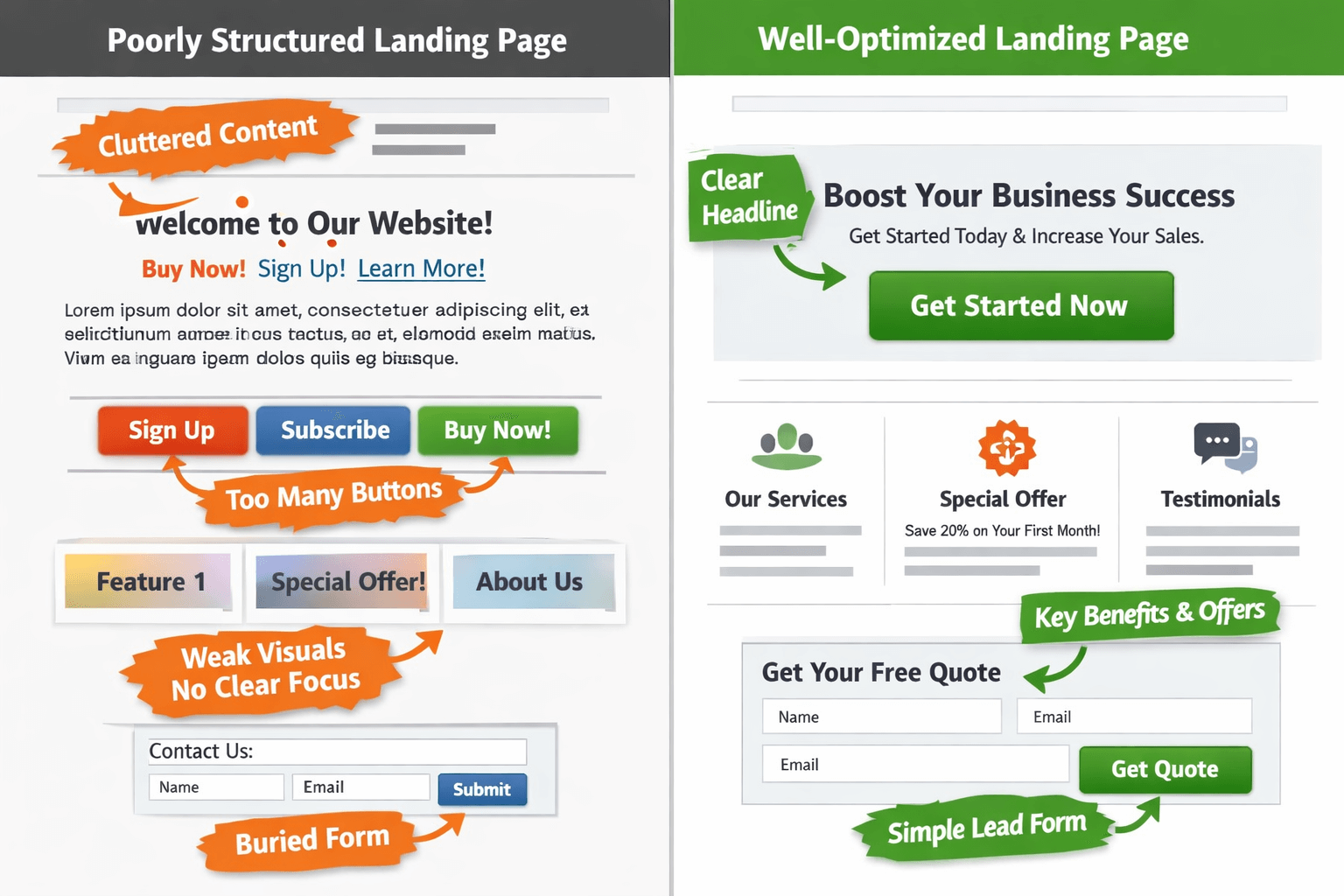
Since landing pages often serve as a visitor’s very first interaction with your brand, optimization here is critical. Focus on:
Information Hierarchy
Structure your content so the most important elements — your value proposition and CTA — appear above the fold. Supporting details like testimonials or FAQs can sit lower on the page.
Iterative Testing
Continuously test the layout, content type, and visual design of your highest-traffic landing pages. Even small adjustments to structure can yield significant conversion gains without overhauling your core messaging.
10 Proven CRO Strategies to Boost Conversions
1. Streamline Your Checkout Process
The checkout page is where conversions live or die. As many as 85% of mobile shoppers abandon their carts before completing a purchase. Reduce friction by simplifying the checkout process, offering multiple payment methods, enabling autofill, and supporting accelerated checkout options to maximize completions.
2. Simplify Your CTAs
Limit the number of choices you give visitors at any one time. Use a prominent hero image paired with a single, clear CTA. Whether you’re promoting a bestseller, a seasonal offer, or new arrivals — clarity always converts better than clutter.
3. Run A/B Tests Consistently
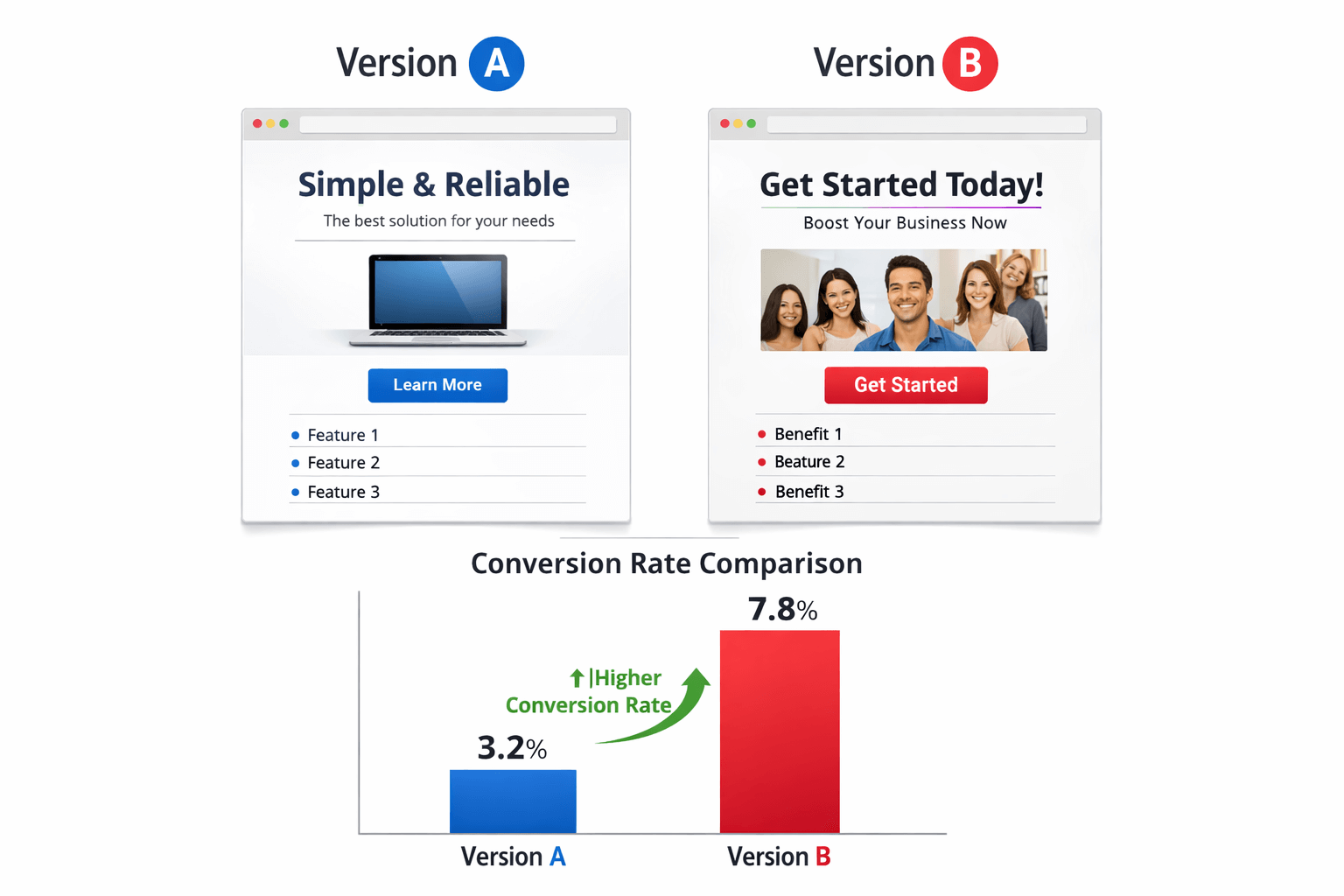
A/B testing (also known as split testing) compares two versions of the same page or element to determine which performs better. Test buttons, banners, headlines, layouts, and email subject lines. Even minor changes — like tweaking icon placement or trust signals — can increase conversions by double digits.
Important: Ensure your site has sufficient traffic before drawing conclusions from A/B tests to avoid statistically insignificant results.
4. Add Smart Pop-Ups
Well-timed, well-designed pop-ups can achieve conversion rates above 9%. Use them to highlight limited-time offers, discount codes, giveaways, or newsletter sign-ups. Trigger them based on user behavior — for example, display an exit-intent pop-up when a visitor moves their cursor toward the browser’s close button.
5. Use a Hello Bar
A hello bar (or welcome bar) is a static banner that appears at the top of your website and stays visible as visitors scroll. It’s an effective, non-intrusive way to announce sales, shipping deals, or promo codes — immediately upon landing on your site.
6. Leverage Social Proof
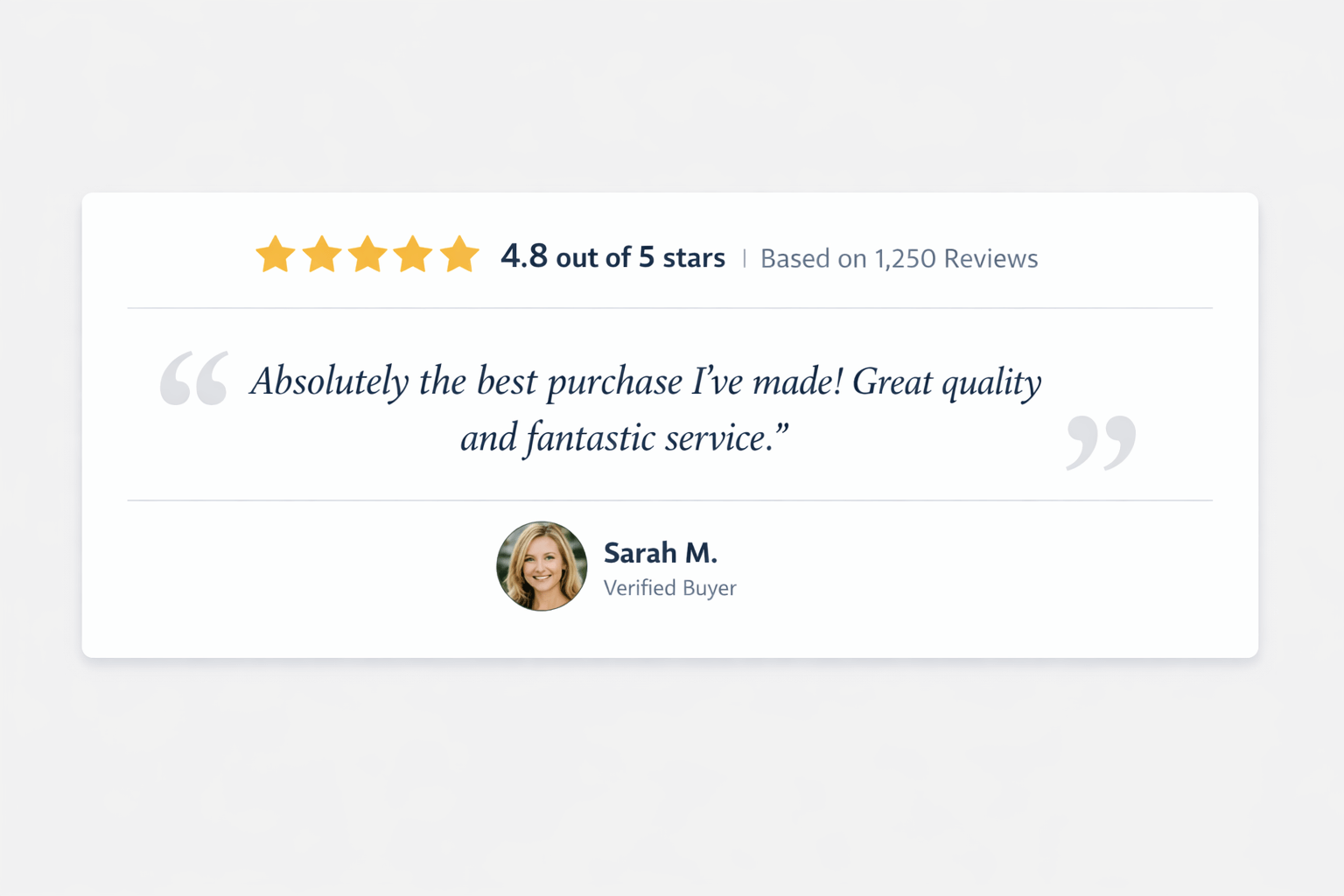
Social proof is one of the most powerful psychological triggers in marketing. Potential buyers trust the opinions of other customers almost as much as personal recommendations. Display customer reviews prominently on product pages, showcase influencer mentions, and use real-time purchase notifications to create urgency. Studies show that product reviews can boost conversions by 3% to 37%, depending on volume.
7. Implement Intelligent Search
If your website has a large product catalogue, a smart search bar can be a game-changer. Feature it prominently on your homepage and enable predictive text that accounts for spelling errors and alternative product names. This helps visitors find what they need faster — and reduces drop-off from frustration.
8. Use Heat Maps to Understand User Behavior
Heat maps translate visitor engagement data into visual overlays, highlighting where users click, scroll, and drop off. Warm zones indicate high activity — making them ideal placement for CTAs and key content. Pair heat maps with session recordings and live view tools for deeper behavioral insights.
9. Send Abandoned Cart Recovery Emails
Abandoned cart emails are one of the highest ROI recovery tactics available. Remind customers of what they left behind, and include a discount code or free shipping offer to nudge them back. Don’t overlook the subject line — it’s the first thing they’ll see, and A/B testing different subject lines can significantly impact your open rate.
10. Optimize Site Speed and Mobile Experience
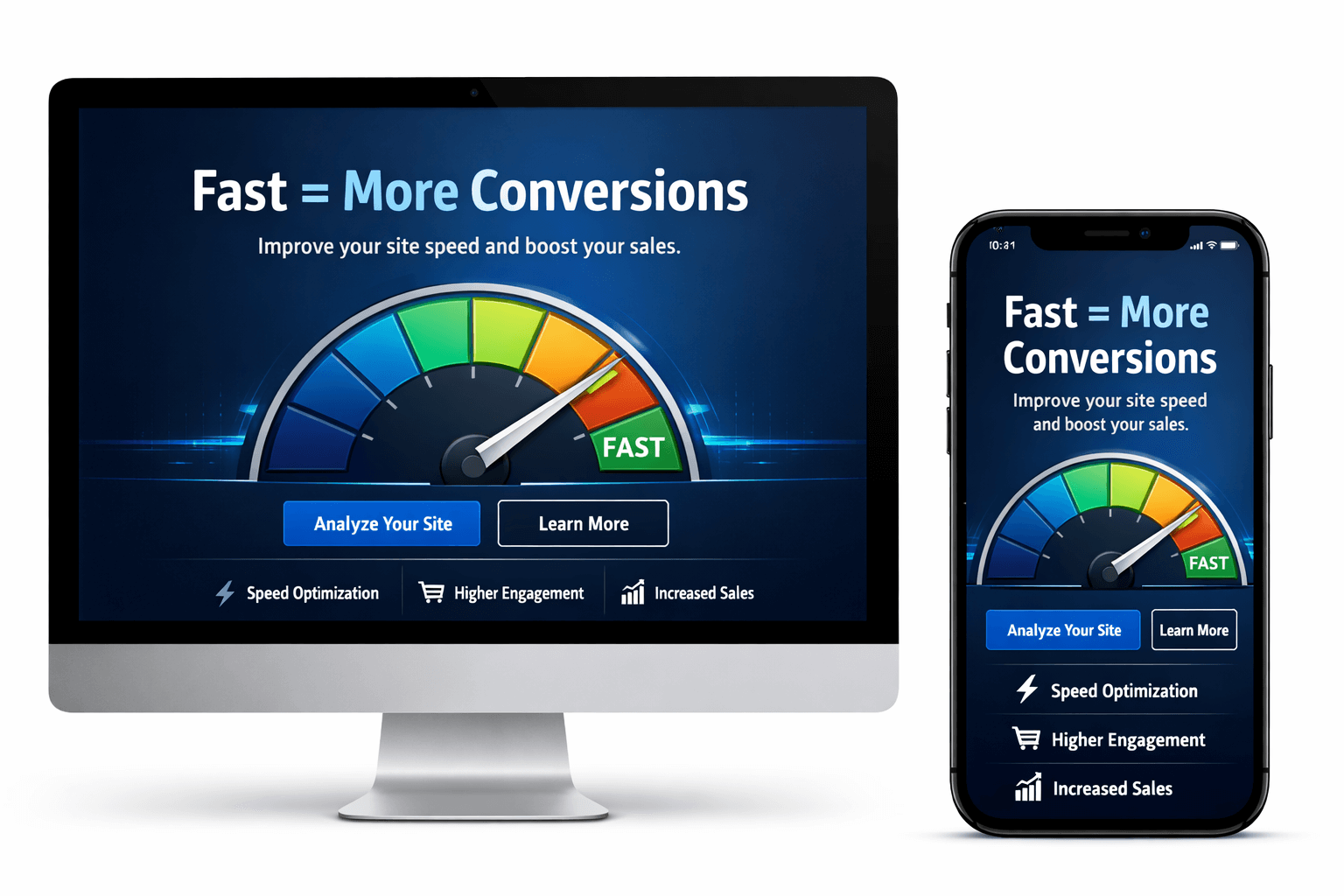
With over 58% of global web traffic coming from mobile devices, a fast, mobile-responsive website isn’t optional — it’s essential. Studies show that sites loading within one second convert 2.5 times higher than those taking five seconds. Compress images, simplify navigation for mobile screens, and regularly audit your performance with tools like Google PageSpeed Insights and Lighthouse.
Top CRO Tools to Get Started
Here are some of the most widely used tools to support your conversion rate optimization efforts:
- Hotjar — Understand user behavior through heat maps, session recordings, surveys, and feedback widgets.
- Google Optimize / VWO — Run A/B and multivariate tests on your web pages.
- Privy / OptinMonster — Increase conversions through smart pop-ups and email capture forms.
- Yotpo / Trustpilot — Collect and display authentic customer reviews and social proof.
- Lucky Orange — Track real-time visitor behavior with heat maps and live session recordings.
- Google PageSpeed Insights — Diagnose speed issues and get actionable recommendations.
CRO and SEO: Better Together
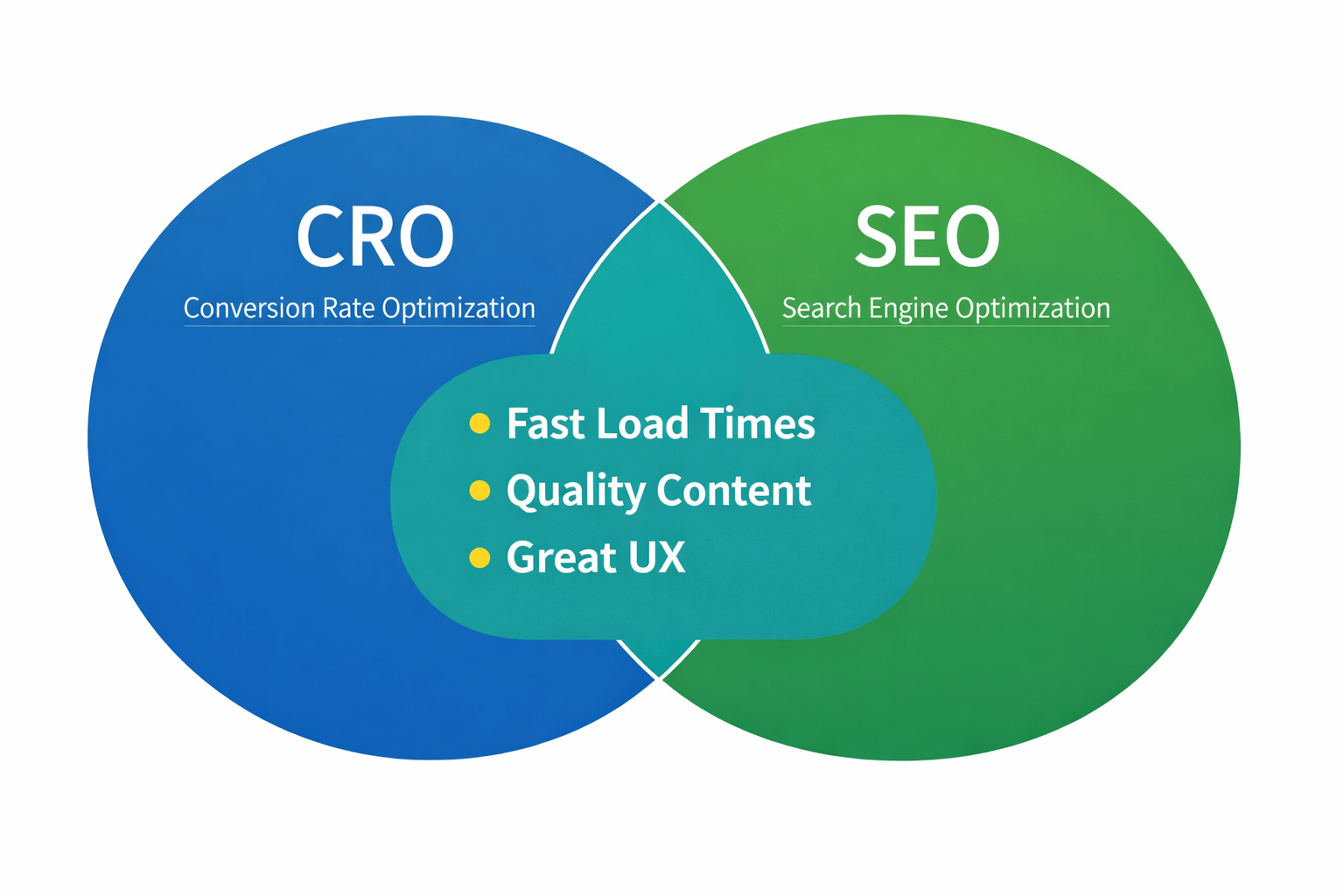
CRO and SEO are not competing priorities — they’re complementary. Search engines reward websites that deliver excellent user experiences, which means poor CRO can negatively impact your search rankings.
As you develop your CRO strategy, keep these SEO best practices in mind:
- Incorporate keyword research into every page’s URL structure, title tag, meta description, headers, and image alt texts.
- Avoid keyword stuffing — write naturally for your human audience first, then optimize.
- Publish high-quality, informative content that demonstrates expertise and builds trust.
- Ensure fast load times, as page speed is a confirmed Google ranking factor.
CRO Best Practices: A Quick Recap
- Run continuous A/B tests to validate improvements before rolling them out site-wide.
- Prioritize user experience (UX) design across both desktop and mobile.
- Write clear, action-oriented CTAs and place them in high-visibility positions.
- Use behavioral analytics to understand what drives (and blocks) conversions.
- Make page load speed a core performance metric, not an afterthought.
Start Building Your CRO Strategy Today
Conversion Rate Optimization is not a one-time project — it’s an ongoing discipline. The more you test, learn, and refine, the more value you’ll extract from the traffic you already have.
Whether you’re just getting started or looking to take your existing strategy to the next level, Algocept’s digital marketing experts are here to help. From UX audits and A/B testing to landing page redesigns and full CRO campaigns — we’ve got the expertise to turn your website into a high-performing conversion machine.